|
|
|
|
|
|
|
|
|
Proselytisation in India: The Process of Hinduisation in Tribal Societies THE recent general elections have seemingly given a jolt to the juggernaut of Hindutva which had been slowly gaining strength and enhancing its constituency in India since the 1980s. Communalism has expanded at an alarming speed spreading into hitherto unchartered territory of society encompassing even the tribal and marginalised communities. There is a strong need to understand it, explain it and develop a consciousness against it. The two scholarly works being reviewed here are a significant contribution in this direction.
A compendium of seven papers contributed by experts and activists, the book also takes into account the reasons behind the growing base of communal ideology among the tribal societies. The first paper discusses the theoretical issues behind the process of proselytisation with reference to Hinduism. The modes and methods of these conversions in the light of aggressive articulations of the Sangh Parivar and its impact on the tribal society are highlighted. The other papers are case studies involving religious change among various tribes in India. The dominant understanding that the religious conversions are the outcome of the activities of religio-cultural organisations is questioned by Sanjay Kumar Singh in his study of the Bhils of West Nimar as it fails to take note of the acceptance of change on the part of the Adivasi’s. The article Adivasi vs. Vanvasi: The Politics of Conversion in Central India highlights the Hindutva agenda of Hinduisation of the tribal identity through creation and propagation of common grounds between tribal and Hindu religion. Another contribution entitled Proselytisation of Tribal Society: A Political Agenda discusses the recent processes of proselytisation by Hindutva forces in the Alirajpur area of Jhabua district of Madhya Pradesh. The stereotypical myth of Hindu tolerance is contested by T. Kishen Singh in his critique of Hindu proselytisation in Manipur. The scholar asserts that in the process of its dominance, the Hindu religion in Manipur was as intolerant as any other religion. The book on the whole tries to understand the Hindutva attempts at redesigning of Indian society and its social and political implications. The shoddy editing with incomplete lines and typographical errors was an avoidable flaw in an otherwise very interesting and instructive volume.
Narayan is brilliant in his deconstruction of the Hinduised way in which the local memories, legends, symbols, histories and myths centering on the local popular heroes of different Dalit castes are being reconstructed and reinterpreted by the BJP to bring them within the Hindutva fold. One such tactic is to project the heroes of these myths and popular folk narratives either as protectors of Hindu religion and culture from the Muslim invaders or as reincarnations of Lord Rama. Linking Dalits with the unified Hindu meta narrative forms an integral part of BJP’s political agenda of uniting all Hindus to form a single Hindu cultural nation. Furthermore, manipulation of cultural spaces and memories of the Dalits is also used for creating division between them and the other communities. Narayan emphasises that the tactics used may differ depending upon the nature of the hero of a particular caste, but the ultimate aim to both unify them under the broader Hindu identity and communalise them does not vacillate. The book was published before the general elections of 2009. The failure of both the BJP and the BSP to encash on its political strategy of Dalit mobilisation through identity politics may raise doubts about the viability of such tactics. However, the destructive nature of communal politics and the perils inherent in it can’t be ignored. The two volumes, therefore, are a significant contribution in their foregrounding of the destructive nature of communal politics and the dangers inherent in the communalisation of folk memories and the infiltration of the politics of hate into the cultural spaces of everyday life. These volumes should be of interest for scholars in the field of social history, cultural studies and tribal and Dalit affairs.
|
||
|
|
||

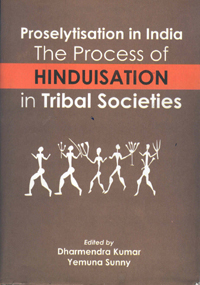 The
volume Proselytisation in India, edited by Dharmenendra Kumar
and Yemuna Sunny, draws our attention to the process of Hinduisation
of tribal societies. Proselytisation has been a subject of debate for
a long time in the socio-political circles in India. However, its
focus has largely been on the Christianisation agenda. The
proselytisation activities of Hindus have remained more or less
unnoticed. On the face of it, the title of the book may seem
erroneous, as Hinduism does not lay emphasis on conversions. However,
the organised programmes of "Shudhi Karan" and "Ghar
Wapasi" being undertaken by the Hindu proselytisers among the
tribes on the one hand and the growing religious bigotry and violence
against the minority in the tribal society on the other, belies this
assumption. The Hinndutava tactics of co-optation of the tribes into
the Hindu fold by obliteration of distinct tribal identity is the
central core of the book. The socio-historical context of this process
and its impact on contemporary Indian politics and society are
highlighted through case studies of different tribes.
The
volume Proselytisation in India, edited by Dharmenendra Kumar
and Yemuna Sunny, draws our attention to the process of Hinduisation
of tribal societies. Proselytisation has been a subject of debate for
a long time in the socio-political circles in India. However, its
focus has largely been on the Christianisation agenda. The
proselytisation activities of Hindus have remained more or less
unnoticed. On the face of it, the title of the book may seem
erroneous, as Hinduism does not lay emphasis on conversions. However,
the organised programmes of "Shudhi Karan" and "Ghar
Wapasi" being undertaken by the Hindu proselytisers among the
tribes on the one hand and the growing religious bigotry and violence
against the minority in the tribal society on the other, belies this
assumption. The Hinndutava tactics of co-optation of the tribes into
the Hindu fold by obliteration of distinct tribal identity is the
central core of the book. The socio-historical context of this process
and its impact on contemporary Indian politics and society are
highlighted through case studies of different tribes.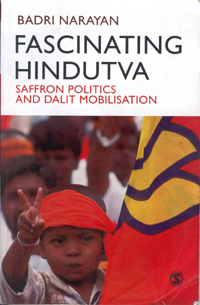 Another
book on the same theme but with a different focus is Facinting
Hindutva: Saffron Politics and Dalit Mobilisation by a well-known
scholar of social history, cultural anthropology and Dalit studies,
Badri Narayan. This a fascinating study of the strategies and tactics
being used by Hindutva forces for mobilising the Dalits around its
political agenda. Based largely on field work in UP and Bihar, where
these processes are clearly visible, the central focus of the book is
on appropriation and manipulation of the cultural capital and cultural
spaces of the marginalised communities by Hindutva forces for
political gains.
Another
book on the same theme but with a different focus is Facinting
Hindutva: Saffron Politics and Dalit Mobilisation by a well-known
scholar of social history, cultural anthropology and Dalit studies,
Badri Narayan. This a fascinating study of the strategies and tactics
being used by Hindutva forces for mobilising the Dalits around its
political agenda. Based largely on field work in UP and Bihar, where
these processes are clearly visible, the central focus of the book is
on appropriation and manipulation of the cultural capital and cultural
spaces of the marginalised communities by Hindutva forces for
political gains.