







Classes for first batch of Bathinda AIIMS begin


Balwant Garg
Tribune News Service
Faridkot, September 18
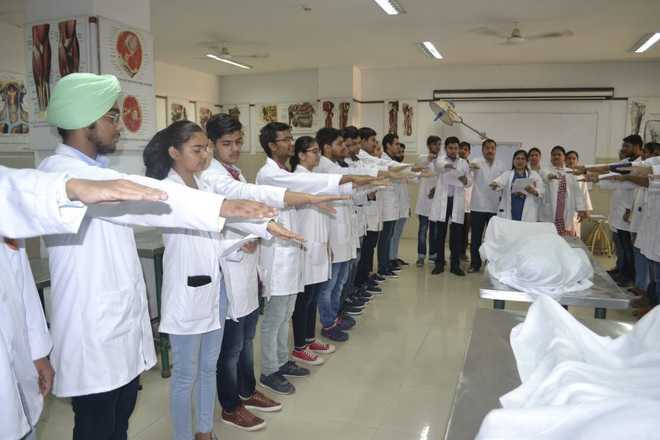
At the beginning of the MBBS classes for the first batch of Bathinda AIIMS, students took the cadaveric oath at their transit camp at Guru Gobind Singh Medical College here on Wednesday.
A cadaver is a human body used in scientific or medical research, especially in medical colleges.
“The cadaveric oath is taken at the onset of the medical curriculum. It is the cadaver which imparts professional principles, knowledge, conduct and altruistic behaviour to medical students,” said Dr Priti Chaudhary, additional professor, Anatomy Department, AIIMS. Dr Chaudhary administered the oath to the students.
She said cadavers were to be held in high esteem and were to be regarded as not only the “first patient” but also the “first teacher” of a medical student. She was briefing the students on the importance of a cadaver as their first teacher and how to pay proper respect to the cadaver during the dissection.
To appreciate the altruistic behaviour of a cadaveric donor, which is a fundamental component of medical professionalism, taking a cadaveric oath is an essential part of bioethics, said Dr Chaudhary.
Dr Navita Agarwal, Dr Anjali Singal and Dr Apurba Patra, all teachers in the Anatomy Department, enlightened the students about voluntary body donation and its current status in Punjab, besides how to handle the cadavers. The students were apprised of various precautionary measures need to take while dissecting cadavers.
The teachers emphasize the guidelines adopted by medical schools to ensure respectful handling of human cadavers during dissection.
Dr. Bholanath, additional professor, SPM, AIIMS, Bathinda, introduced the students about various methods of biomedical waste management.
“Every human cadaver that undergoes anatomical dissection enriches medical science and deserves to be treated with utmost respect. Prior to dissecting cadavers whereby they reflect on their conduct and habits in the dissection room, we want the students to ensure that the human cadaver is treated with respect and dignity while it is utilised within the domain of medical education,” Dr Chaudhary added.
Unlock Exclusive Insights with The Tribune Premium
Take your experience further with Premium access.
Thought-provoking Opinions, Expert Analysis, In-depth Insights and other Member Only Benefits
Already a Member? Sign In Now